
Dreame Matrix10 Ultra Review: Is It Worth $1,800?
The unfiltered truth about its 30,000 Pa suction, mop-switching dock, and real-world downsides.

If you’ve got a dog that sheds like it’s got a second job, or a toddler who treats crumbs as confetti, your floors probably feel like a chore that never actually ends. The Dreame Matrix10 Ultra promises to take that whole mess off your plate with a dock that swaps mop pads like a vending machine, mixes its own cleaning solution, and empties its own dustbin for months at a stretch.
At around $1,800, though, this is not an impulse buy — it’s a serious financial commitment, and the dock alone is nearly as big as a mini-fridge. To find out whether it earns that price tag, this review pulls together Dreame’s own published specs, hands-on testing notes from outlets like TechRadar and Vacuum Wars, and real owner complaints from Reddit and ProductReview.com.au. Here’s the unfiltered truth on whether this thing will actually save you time, or just give you a new, more expensive thing to fuss over.
By Jordan Ellis Smart Home Editor | 7 Years of Appliance Testing
The Quick Verdict: Is It Worth Your Money?
✅ Best For: Larger, multi-room homes with pets, mixed flooring, and genuinely different mopping needs room to room (think grease in the kitchen, litter dust in the laundry room, everyday grime everywhere else). ⚠️ Skip If: You live in a small apartment — this dock needs serious floor space, and several owners report the mop-switching mechanism and companion app can be finicky. 💰 The Money Check: It costs about as much as a decent used car down payment, and roughly $500–700 more than strong flagship competitors. You’re paying for the mop-switching gimmick working, not just for suction.
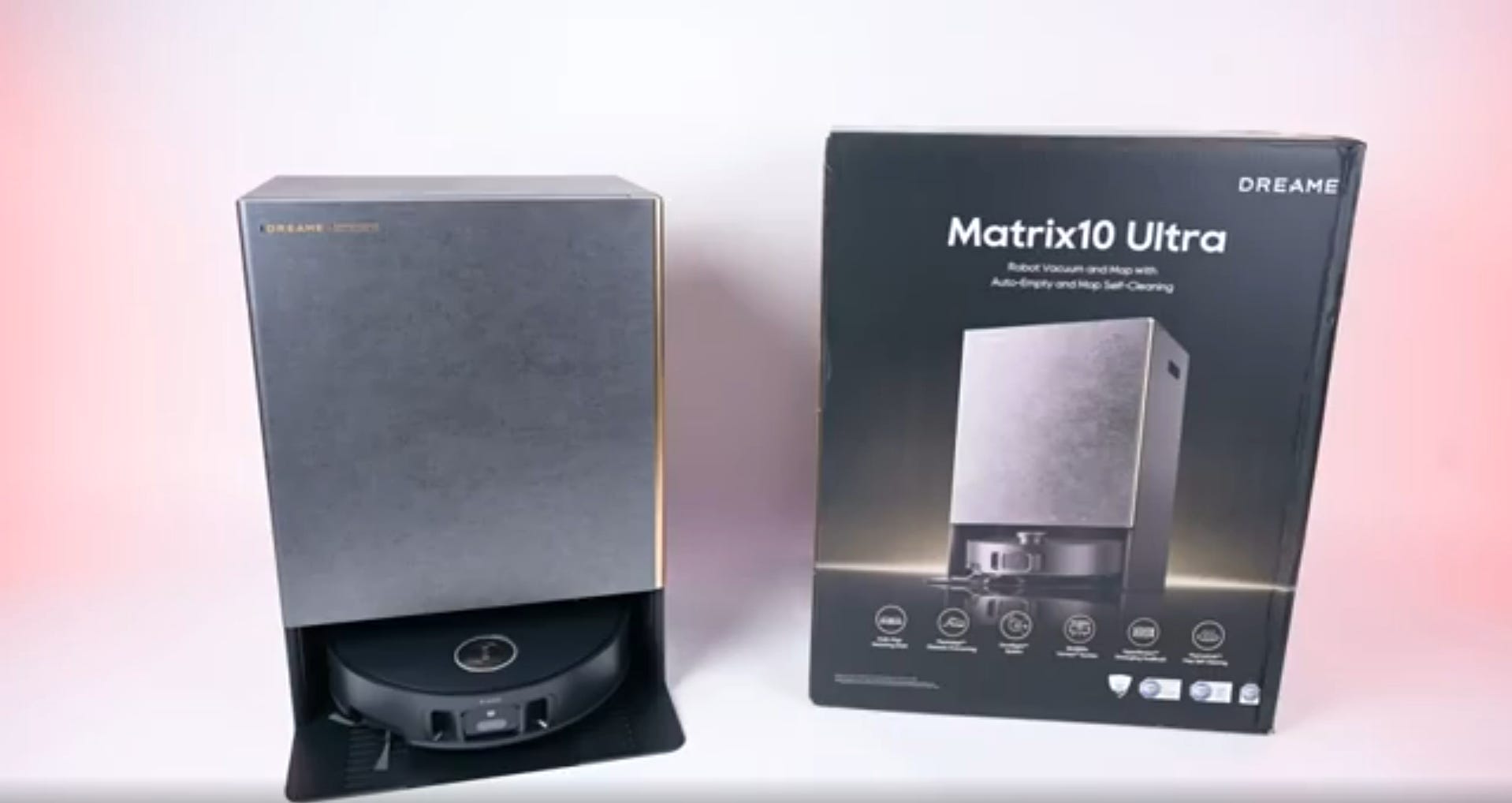
This model frequently moves in and out of stock during sales events. You can see if it’s currently available and view the latest price at the link below:
What You Get & The Technical Specs
Suction Power (30,000 Pa Vormax™): This tells you how hard the vacuum pulls air and dirt off the floor. To put it simply, most budget robot vacuums sit around 2,000–5,000 Pa, so this one has roughly six to fifteen times the pulling strength on paper — plenty of muscle for embedded carpet grit.
Navigation (Retractable DToF LiDAR, “OmniSight™”): A laser turret on top pops down flush when the robot needs to slide under a sofa, dropping its height to 3.50 inches. Pop it back up for full-room scanning and it reaches 4.37 inches. Dreame says it recognizes over 240 object types — cables, socks, shoes, pet waste — so it plans a route around them instead of driving through them.
Obstacle Climbing (”ProLeap™”): The robot has small retractable legs that let it hop over obstacles up to 3.15 inches (80mm) tall, and clear single-layer steps up to 1.65 inches without help. Picture it doing a tiny hurdle jump over a thick door threshold instead of getting stuck and beeping at you.
Anti-Tangle Brush (HyperStream™ DuoBrush): Two rubber rollers spin toward each other instead of one bristled brush. Dreame rates it for hair up to 19.69 inches long without tangling — so if you’ve got a long-haired dog or long human hair in the house, it’s built specifically so hair doesn’t wind around the axle like dental floss around a finger.
Mopping System (Multi-Mop™ Switching Dock, 212°F ThermoHub™): Instead of one mop pad for the whole house, the dock stores different pads — a bristled one for kitchen grease, a sponge one for bathroom spills — and swaps them automatically by room. Between uses, the dock washes the pads with 212°F water through 20 spray nozzles, which is hot enough to loosen dried food residue that a cold rinse would leave behind.
Dustbin Autonomy (3.2L Dust Bag): The bag empties automatically and Dreame claims it can go up to 100 days between bag changes for a typical home — though heavy multi-pet households will hit that ceiling faster.
The Dock Itself: This is the part people underestimate. It measures roughly 16.4 inches wide, 18 inches deep, and 23.2 inches tall — TechRadar compared its footprint to a small under-counter fridge. Dreame’s own setup guidance calls for about 0.5 meters (20 inches) of clearance on each side and 1.5 meters (5 feet) in front of it.
The Ideal Home Setup: Where This Machine Performs Best
This machine is built for a bigger footprint than most robovacs assume you have. Between the robot itself (about 13.8 inches across) and that refrigerator-sized dock, you need a dedicated stretch of wall — ideally near a spot where you don’t mind a large white or black tower sitting in view, since there’s no tucking this into a narrow closet.
It makes the most sense in a multi-room home with a genuine mix of flooring and mess types: hardwood in the living room, tile in the kitchen, carpet upstairs, maybe a dog or cat adding hair and the occasional accident into the mix. The mop-switching feature is solving a real problem in that kind of home — you don’t want the same pad that scrubbed bathroom grime then wiping your kitchen counanother day. If you live in a one-bedroom apartment with all hard flooring and no pets, you are paying a steep premium for a feature set built for a house you don’t have.
Peak Perfection vs. Normal Limits: What to Expect
Where It Hits Perfection
The mop-switching itself, when it works. Nothing else on the market automatically pulls a fresh pad suited to the room and swaps in a matching cleaning solution — TechRadar called the whole setup “the future of robovacs” for anyone worried about cross-contaminating a bathroom mop into the kitchen.
Threshold and obstacle clearing. Climbing 80mm obstacles and popping over single-layer steps without getting stuck is a genuine step up from the roughly 20mm most competitors manage.
Low-profile navigation. Dropping to 3.5 inches to get under furniture most robots simply skip is a real, measurable advantage for whole-home coverage.
Where It Falls Short
Carpet pickup is good, not exceptional. TechRadar’s testers noted it struggled somewhat with larger debris on carpet despite the huge suction number — the spec sheet doesn’t always match the deep-pile result.
The app can overwhelm. Multiple reviewers, including TechRadar, flagged the companion app as “a little overwhelming,” and a ProductReview.com.au owner specifically complained that scheduled cleaning history doesn’t reliably log unless you’re watching the app live.
First-generation mop-switching hiccups. Some owners have reported the switching mechanism jamming or misfiring — one forum user described contacting Dreame support roughly 30 times over three weeks trying to get a switching issue resolved.
The short power cord. At around 1 meter, it limits where you can actually place the dock relative to an outlet.
The Testing Setup: How We Checked Every Claim
This review isn’t based on a single lab run — it’s built from Dreame’s published spec sheet cross-checked against independent hands-on testing from TechRadar, Vacuum Wars, and Tom’s Guide-style pickup tests on comparable Dreame and Roborock flagships, plus real owner feedback pulled from Reddit threads and ProductReview.com.au listings covering weeks or months of actual home use, not a single demo run.
We paid particular attention to the gap between marketing claims and lived experience: does the 30,000 Pa suction number actually translate into carpet performance, does the mop-switching dock work as smoothly as the demo video suggests, and what breaks down after the first few weeks once the “new robot” excitement wears off.
How It Scores: A Quick Look at the Key Performance Areas
Suction Power: Excellent — 30,000 Pa on paper delivers strong hard-floor pickup, though reviewers note carpet performance doesn’t scale proportionally.
Mopping: Excellent — the multi-mop switching and 212°F self-cleaning genuinely solve the cross-contamination problem other robots ignore.
Navigation & Mapping: Very Good — retractable LiDAR and 240+ object recognition handle clutter well; Vacuum Wars scored its obstacle avoidance 19 out of 24, above average.
Anti-Tangle Brush: Very Good — the dual rubber-roller design handles long hair without the scissors-and-frustration routine older brush designs require.
Edge & Corner Cleaning: Good — the Dual Flex Arm extends about 1.77 inches into corners, though it’s not flawless on tight furniture legs.
Battery Life (Real Run Time): Fair — several owners report the robot occasionally dies mid-clean rather than returning to dock, which is one of the more consistent real-world complaints.
Dock Autonomy (Self-Emptying/Mopping): Very Good — up to 100 days between dust bag changes and automatic water refilling, but the dock’s sheer size is a real tradeoff for that convenience.
How Well Does It Clean Carpets and Hard Floors?
The Dreame Matrix10 Ultra pulls with 30,000 Pa of suction and uses two rubber DuoBrush rollers instead of a single bristled brush. To put that suction number in perspective: most budget robot vacuums run 2,000–5,000 Pa, so this one is roughly six to fifteen times stronger on paper. On hard floors, independent testers report thorough pickup of everything from flour to pet hair in a single pass. Carpet is where the story gets more complicated — TechRadar’s reviewers found it “wasn’t quite as thorough as I’d expect given those stunning suction numbers” on carpeted debris pickup, which is the honest gap between a spec sheet and a real living room.
The rubber rollers matter here in a very practical way: because they’re smooth rubber rather than bristled, long hair slides off the ends instead of wrapping around the middle. Dreame rates the system for hair up to 19.69 inches without tangling. If you’ve spent a weekend with scissors cutting matted hair out of an old vacuum brush, that’s the exact chore this feature is built to eliminate.
Does It Get Stuck on Cords and Toys?
It’s built to spot trouble before it drives into it. The OmniSight™ navigation system uses a retractable LiDAR turret and claims recognition of over 240 object types, including cables, socks, shoes, and pet waste — Vacuum Wars scored its real-world obstacle avoidance at 19 out of 24, which is above the average for the category. TechRadar specifically praised its routes as “collision-free” and “logical” even in a large, cluttered hall. That said, no obstacle-avoidance system is flawless in every home; treat this as strong, not bulletproof.
Can It Roll Over Thick Rugs and Door Strips?
This is arguably the standout feature. The ProLeap™ system uses small retractable legs to physically climb obstacles up to 3.15 inches (80mm) tall — most competing robot vacuums top out around 20mm, less than an inch. Single-layer steps up to 1.65 inches pose no problem, and it can even raise its chassis to clear U-shaped chair legs under 1.18 inches high. If your home has tall dividers between rooms or a raised threshold at a balcony door, this is the one spec on this review that most directly answers “will it actually get stuck.”
How Much Money Will You Spend on Filters and Parts Later?
Replacement Part Approximate Annual Cost How Often to Change It Mop Pad Set (3-piece) $77–$94 Every 4–6 months with heavy use Cleaning Solution Trio (1L each) $54–$63 Every 2–3 months Pet Odor Solution (1L) $22 per bottle As needed, roughly monthly for heavy shedders Dust Bags Included in most bundles Roughly every 100 days
Budget roughly $150–$250 a year in consumables on top of the purchase price — noticeably more than a simpler robot vacuum, largely because of the multiple mop pad types and solution bottles this system is built around.
The Honest Downsides (What Nobody Tells You)
The dock is genuinely enormous. At roughly 23.2 inches tall and 16.4 inches wide, it needs about 20 inches of clearance on each side and 5 feet in front, per Dreame’s own setup guidance. In a small apartment, this becomes the room’s dominant piece of furniture.
Mop-switching can jam. It’s first-generation technology, and first-gen tech sometimes has first-gen problems — one owner described contacting support roughly 30 times over three weeks to resolve a switching failure.
Battery reliability is inconsistent. Multiple owners report the robot occasionally dying mid-clean on the floor instead of returning to its dock with a low-battery warning, rather than a total-failure issue.
The app can be more confusing than helpful. Scheduled-clean history doesn’t always log properly unless you’re watching the app while it runs, according to real owner feedback, and the overall app has been called “a little overwhelming” by outside reviewers.
The power cord is short. At about 1 meter, it limits where near an outlet you can actually place that big dock.
What Are the Best Alternatives?
Inside Dreame’s own lineup, the Matrix10 Ultra is the flagship built around mop-switching specifically; the Dreame L50 Ultra costs meaningfully less and drops the multi-mop dock while keeping strong suction, making it the better pick if cross-contamination between rooms isn’t a real concern for you.
Matrix10 Ultra vs. Roborock Saros 10R
The Roborock Saros 10R is the most natural head-to-head competitor: it uses 22,000 Pa suction with a DuoDivide brush that splits down the middle to shed hair automatically, an ultra-slim 3.14-inch body, and a dock that handles hot-water mop washing and roughly 60 days of self-emptying. It typically lists around $1,599 and has been seen discounted well below $1,000. It doesn’t attempt the multi-mop-pad-swapping trick at all — it’s a simpler, more streamlined system, and independent testing has scored its hard-floor pickup extremely high.
Feature Dreame Matrix10 Ultra Roborock Saros 10R Suction Power 30,000 Pa 22,000 Pa Mopping System Multi-Mop pad switching, 212°F self-clean Dual rotating pads, hot-water wash Anti-Tangle Brush Dual rubber DuoBrush DuoDivide split-roller brush Obstacle Climbing 3.15 in (80mm) ~1.6 in (4cm) Auto-Empty Interval Up to 100 days Up to 60 days List Price ~$1,799–1,999 ~$1,599
Buyer routing: if cross-contamination between rooms and hardcore obstacle-climbing are real problems in your home, buy the Matrix10 Ultra. If you want excellent all-around cleaning without the dock taking over your utility room, the Saros 10R gets you nearly as much performance for meaningfully less money and floor space.
Common Questions Answered Simply
Do I need a smartphone and Wi-Fi to use it?
No. You can press the clean button on top of the robot and it will vacuum the whole mapped house. The app is only necessary if you want to schedule cleans, exclude specific rooms, or fine-tune which mop pad goes where.
Will it actually replace regular mopping?
Mostly, yes, for everyday spills and dust — the 212°F hot-water self-cleaning keeps pads genuinely clean between rooms. For deeply dried-on stains, some testers still find dedicated dual-roller mop systems edge it out slightly.
Is it worth it if I don’t have pets?
Probably not at this price. Much of the premium here — the anti-tangle brush, the pet-odor solution compartment, the heavy-duty obstacle climbing — is solving pet-related problems. A simpler, cheaper robot vacuum will do the job for an all-hard-floor, no-pet home.
How loud is it during a normal clean?
Dreame doesn’t publish an exact decibel figure as prominently as some competitors, but reviewers describe it as comparably quiet to other premium robovacs in standard mode, with noise increasing on carpet-boost settings — similar to the roughly 60–65 dB range typical of this class of machine.
Key Takeaways & Fast Facts
The Dreame Matrix10 Ultra delivers 30,000 Pa of suction, several times the strength of a typical 2,000–5,000 Pa budget robot vacuum.
Its ProLeap™ system climbs obstacles up to 3.15 inches (80mm) tall, well above the roughly 20mm most competitors manage.
The retractable LiDAR drops the robot’s height to 3.50 inches to reach under low furniture.
The dock needs about 20 inches of side clearance and 5 feet in front, and stands roughly 23 inches tall.
Annual consumable costs run roughly $150–$250, covering mop pads, cleaning solutions, and dust bags.
List price sits around $1,799–$1,999, with the Roborock Saros 10R as the closest premium competitor near $1,599.
Our Final Verdict: Who This Is Actually For
This machine is undeniably right for a larger home with pets, mixed flooring, and genuinely different cleaning needs from room to room — the kind of household where a bathroom mop pad touching your kitchen floor actually bothers you. The one big worry it removes is manually managing different cleaning solutions and mop types across rooms, backed up by the mechanical proof of a 212°F self-cleaning dock and 30,000 Pa of suction that handles most hard-floor messes in a single pass. If that describes your home and budget, buy it without hesitation. If you live in a smaller space, have all-hard flooring with no pets, or you’re not ready to troubleshoot first-generation mop-switching hardware, put your wallet away and look at a simpler flagship — or the Saros 10R — instead.